SLOJOURN Fireside Chat: The Founders of The Mysa Motel on Circular Hospitality, Community Impact, and Doing Things Differently
In conversation with Jase and Eliza Raine
For the first edition of our Digital Fireside Chats, we sat down (virtually) with Jason and Eliza Raine — the duo behind The Mysa Motel in Palm Beach on Queensland’s southern Gold Coast. Their approach to sustainability isn’t about ticking boxes. It’s a full-circle mindset that’s reshaping how boutique hospitality can look, feel, and operate in the real world. We spoke to them about rebuilding a retro motel with low impact and high intent, how circularity can serve both the planet and your bottom line, and why staying small can be a powerful thing.
Let’s start at the beginning. Why did you take on the Palm Trees Motel in the first place?
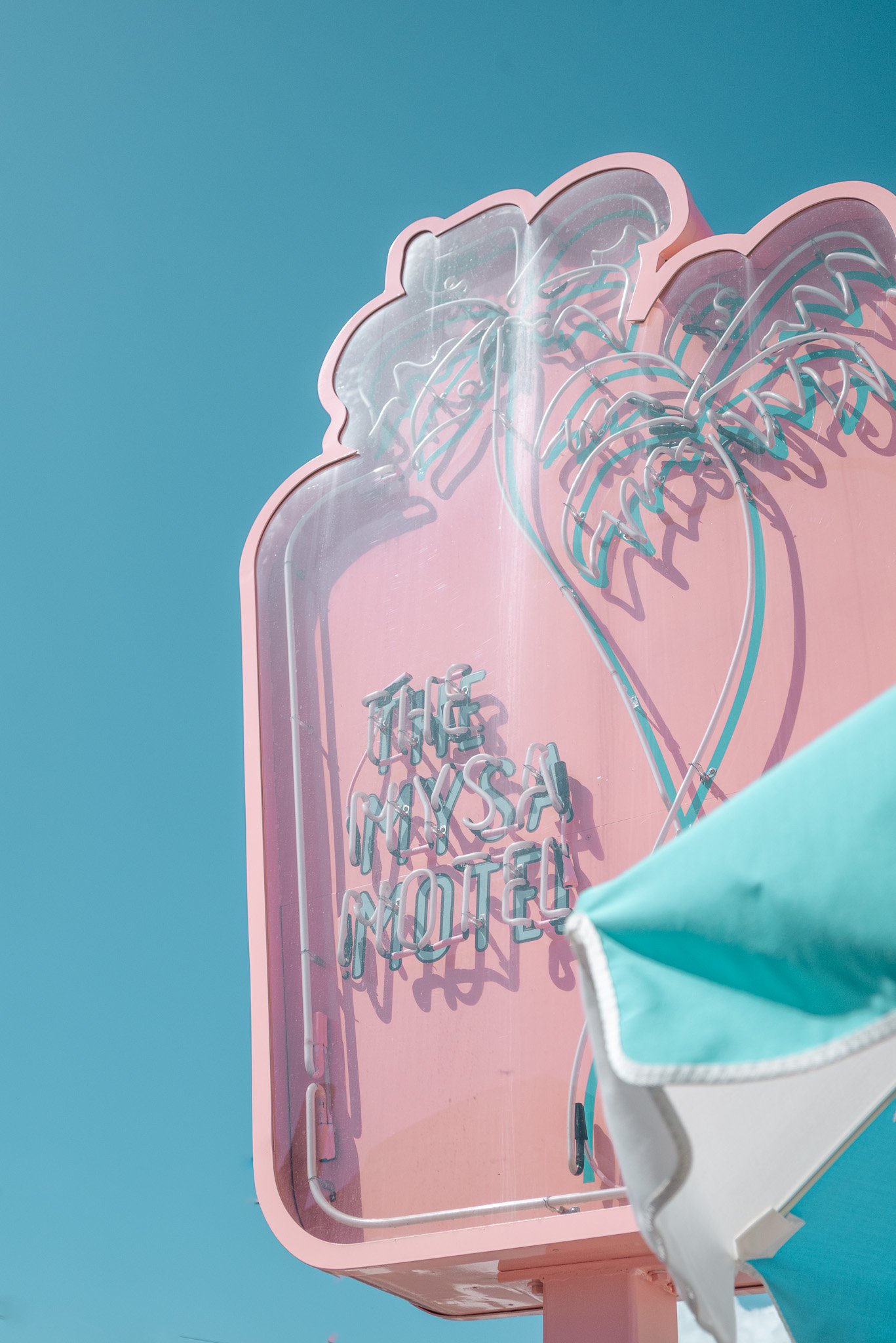
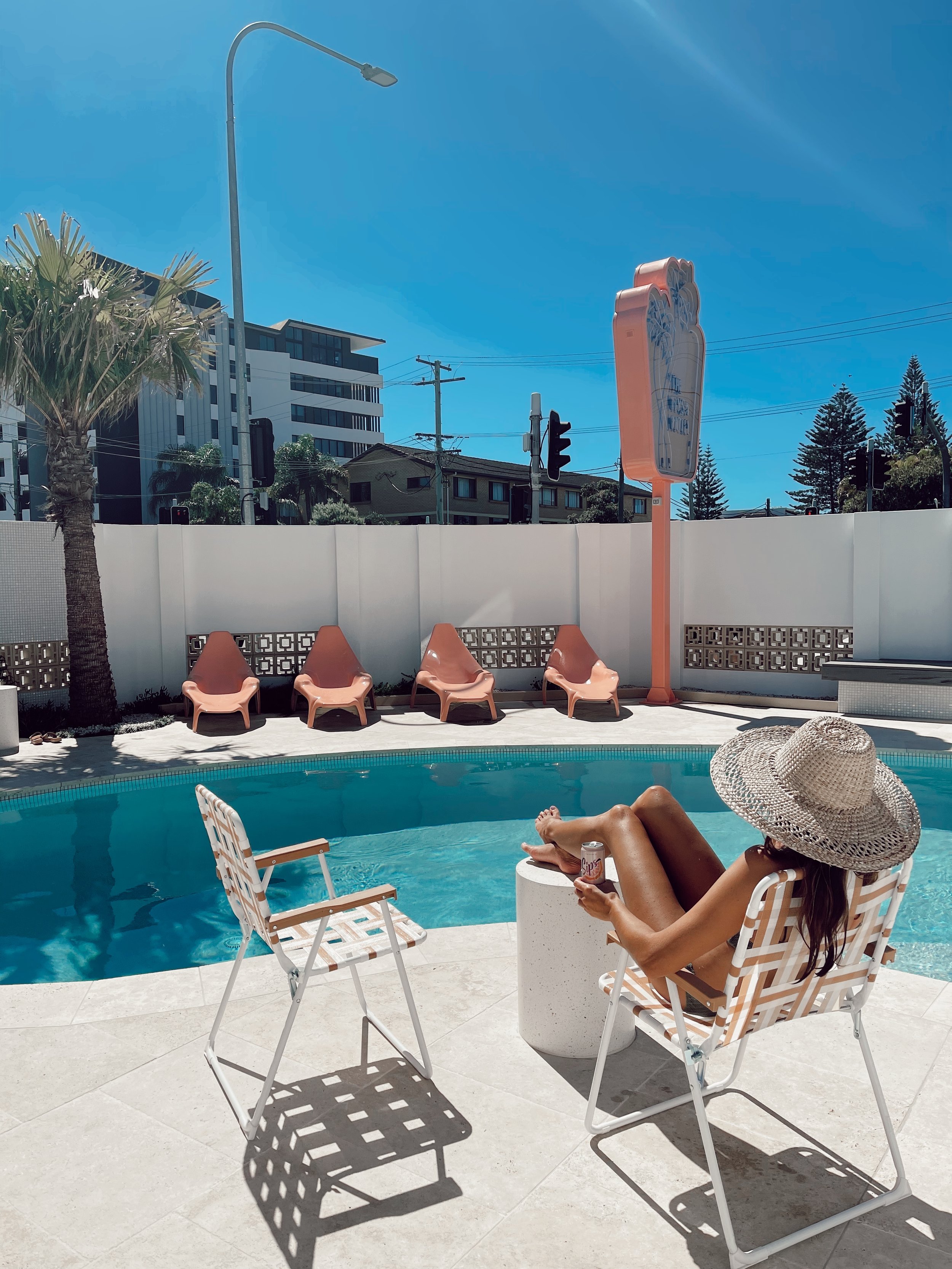
Eliza: We weren’t looking for a motel, but we’ve always loved old buildings with a story. When the Palm Trees Motel went up for sale in 2019, we saw potential. It had so much character — breeze blocks, pink tiles, vintage signage. But it had also been left to fall apart. We knew we could bring it back in a way that honoured the bones, but reimagined the purpose.
Jason: And we didn’t want to start from scratch. There’s enough concrete and construction in the world. We wanted to show what’s possible when you work with what’s already there — and make better choices at every stage.
You’ve used the term “circular hospitality” to describe what you’re doing. What does that mean, practically?
Jason: Circularity is about minimising waste and maximising reuse. It’s looking at everything — from the build to the daily operations — through a lens of: how can this last longer, create less waste, and give back more than it takes?
Eliza: For the renovation, that meant keeping the original structure and layout. We salvaged breeze blocks from demolition sites, repurposed hardwood from the ceiling trusses, used end-of-line tiles that would’ve gone to landfill. We weren’t aiming for perfection — just better.
Jason: In the operations, we generate our own solar, we collect rainwater for toilets and gardens, all the products are refillable, we don’t do single-use plastics. Even our guest compendium is digital. But it still feels luxurious — because to us, good design and low impact should go hand in hand.
You’ve also kept everything incredibly local — not just the build, but the supply chain, the guest experience…
Eliza: Yes. Every tradesperson we used was from the Gold Coast. We source everything we can locally — the snacks in the guest packs, the bathroom products, even our drink coasters. We want guests to feel like they’re part of this place, not just staying in it.
Jason: We also work with local students doing hospitality placements. We’ve offered emergency accommodation during the Northern Rivers floods. Sustainability has to be about people too — not just the environment. That’s a huge part of circularity for us.
You’ve hosted shoots, elopements, full motel takeovers. Was that always part of the plan?
Eliza: Not really! But the response has been amazing — especially from brands that want a more conscious backdrop. Cotton On shot a campaign here. Rhythm has used it. And we’ve had some beautiful micro-weddings and wellness retreats. The space lends itself to it.
Jason: It’s also helped us stay financially sustainable — and reinvest in the property. When your values are clear, the right kind of people find you.
Why do you think this model is resonating so much now?
Eliza: People are more aware. There’s a growing number of travellers who want to support places doing things differently. They still want comfort and design — but they don’t want it to come at a cost to the planet.
Jason: We didn’t set out to build a “sustainable motel”. We just asked better questions at every step. And that’s what circularity is: being thoughtful, intentional, curious.
What advice would you give to someone wanting to take a similar approach?
Jason: Start with what you’ve got. Use what exists. Think about who you’re supporting in your community. Perfection isn’t the goal — progress is.
Eliza: And don’t assume it’s more expensive or harder. Often it’s just different — and it feels better knowing every decision is aligned with your values.
Finally — what’s your vision for the future of small, sustainable stays like Mysa?
Eliza: I think there’s huge opportunity for motels and older buildings to be reimagined. Not just as Instagrammable stays, but as spaces that really contribute — environmentally, socially, culturally.
Jason: We’re small, but we’ve shown that small can be mighty. If more operators adopted even some of these practices, the collective impact would be massive.