You’ve landed in…

BHUTAN
A Slow Travel Guide for Bhutan
“Bhutan is a paradox - a kingdom of tradition and transformation. There’s an energy here that is impossible to articulate, a stillness that reshapes you. It’s a place where silence is never empty, where nature isn’t admired but revered, and where tradition is both honoured and used as a catalyst to progress into modernity at the same time.
At Slojourn, we’ve sought to honour that spirit in our curation. Bhutan is for those who travel not just to see, but to shift - slowly, deeply, meaningfully. May you tread lightly, and may you leave changed.”
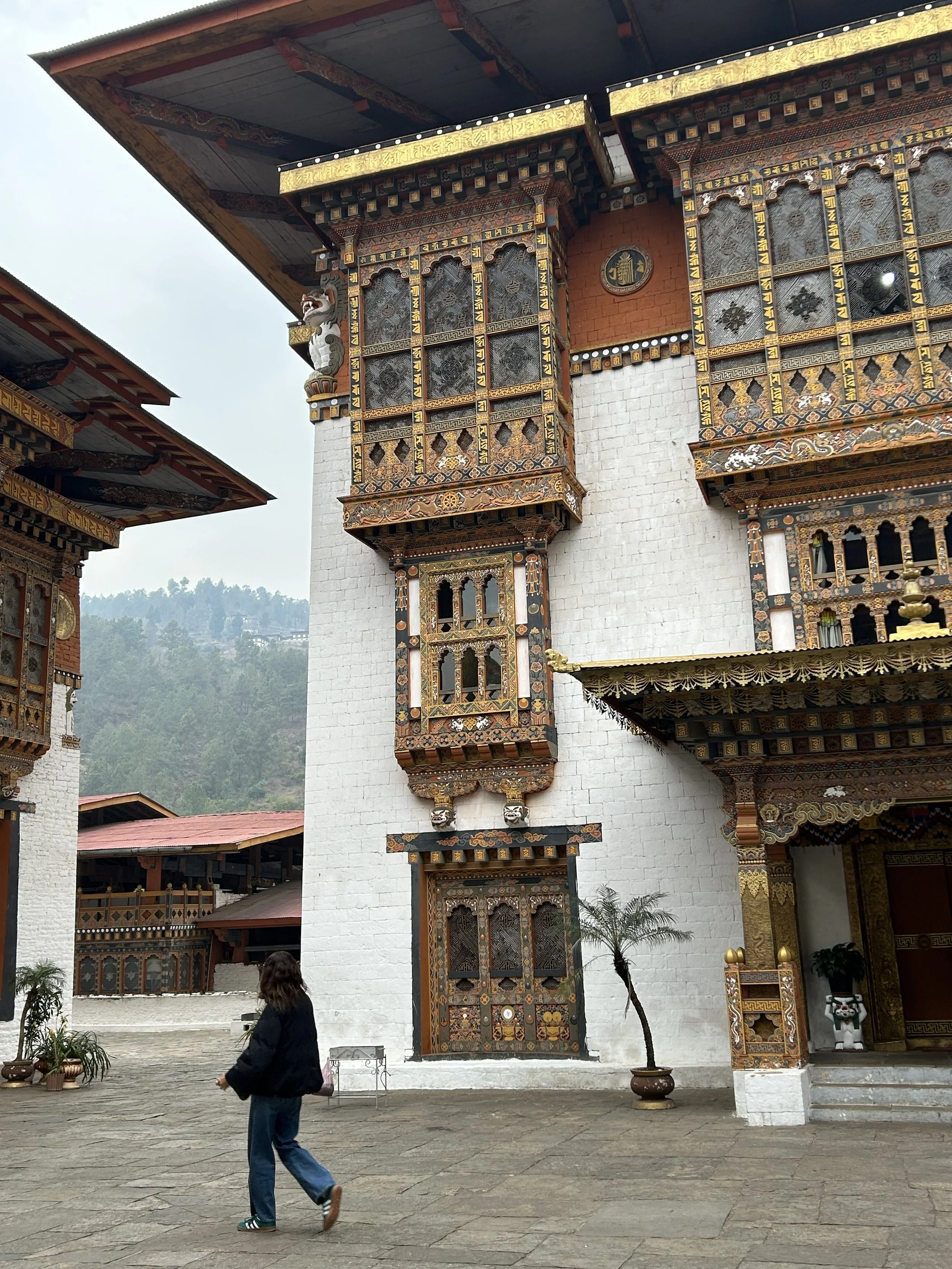
Tess Willcox - Founder
From our curators
The compass
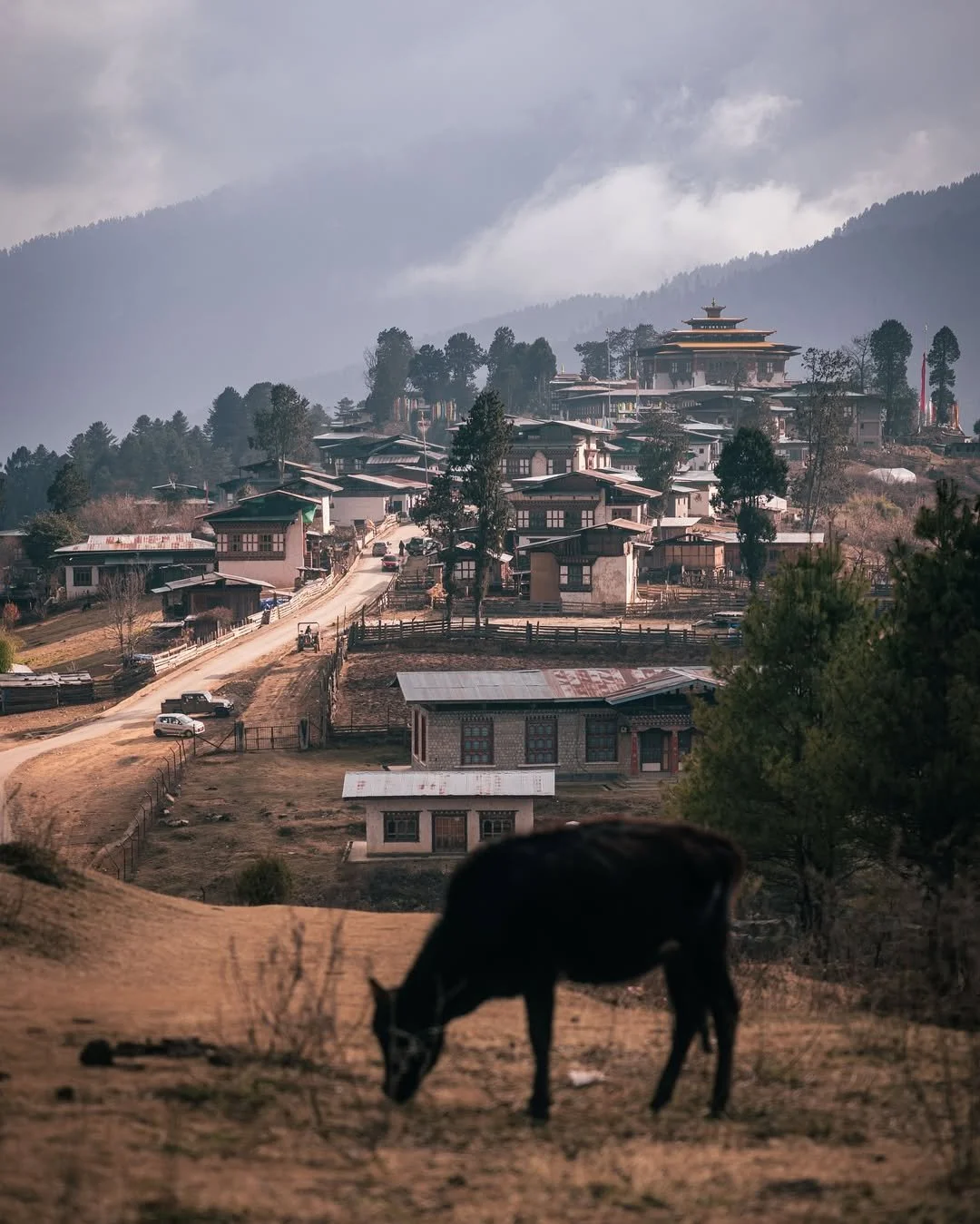
BENEATH THE SURFACE: Tucked between Tibet and India, Bhutan isn’t so much discovered as revealed, one winding mountain road at a time. A sovereign kingdom and ecological sanctuary, it’s a tapestry of ancient forests, glacial rivers, and cloud-wrapped dzongs that rise like myths from the mist. With elevations that stretch from subtropical valleys to Himalayan peaks, Bhutan holds four seasons in a single breath, and each step feels like a pilgrimage.
Bhutan is the only carbon-negative nation on earth. Its forests cover over 70% of the land, its rivers run un-dammed, and its philosophies (rooted in Gross National Happiness) prioritise wellbeing over GDP. Here, time is measured in prayer flags, and silence is a sacred currency. Monasteries carved into cliffs hum with ritual. Villages move to lunar calendars and hospitality is offered not as service, but as ceremony.
BEST WHEN: March - May, September - November (Crisp mountain air, wildflower valleys, and festival season).
FOR THOSE WHO LOVE: Remote sanctuaries, high-altitude hikes, and Himalayan mysticism.
OFF SEASON MAGIC: June - August (Verdant landscapes, fewer travellers, and Bhutan at its rawest).
HOW TO EXPLORE: Move slow, stay open. Bhutan reveals itself in whispers.

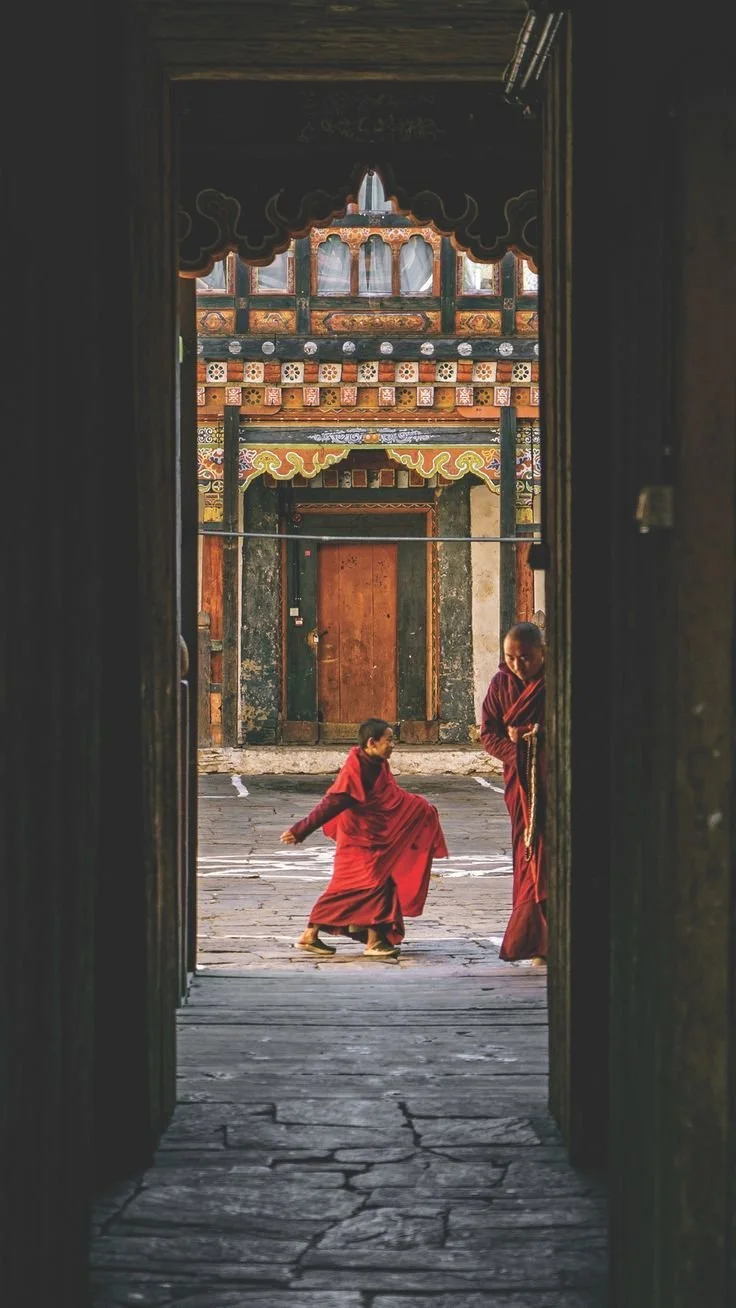
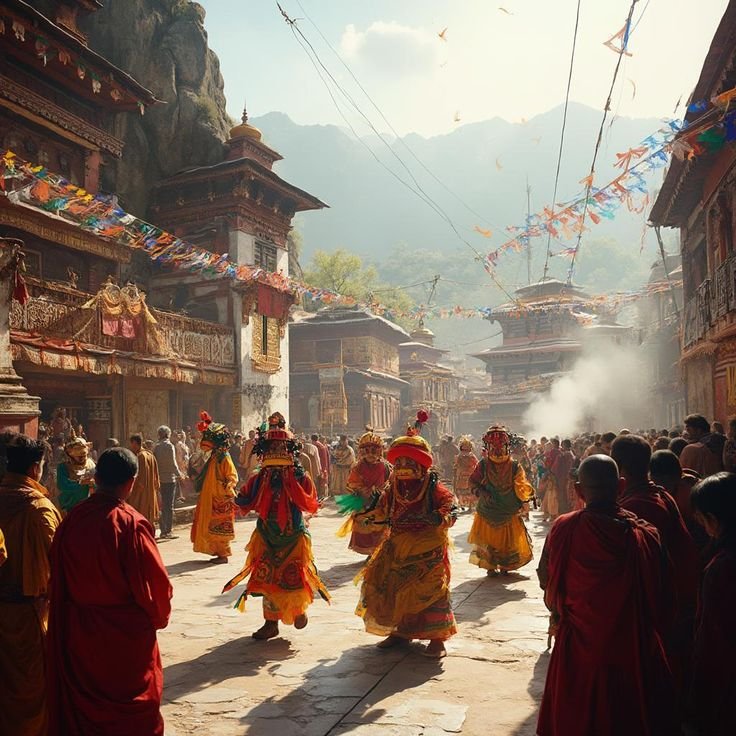
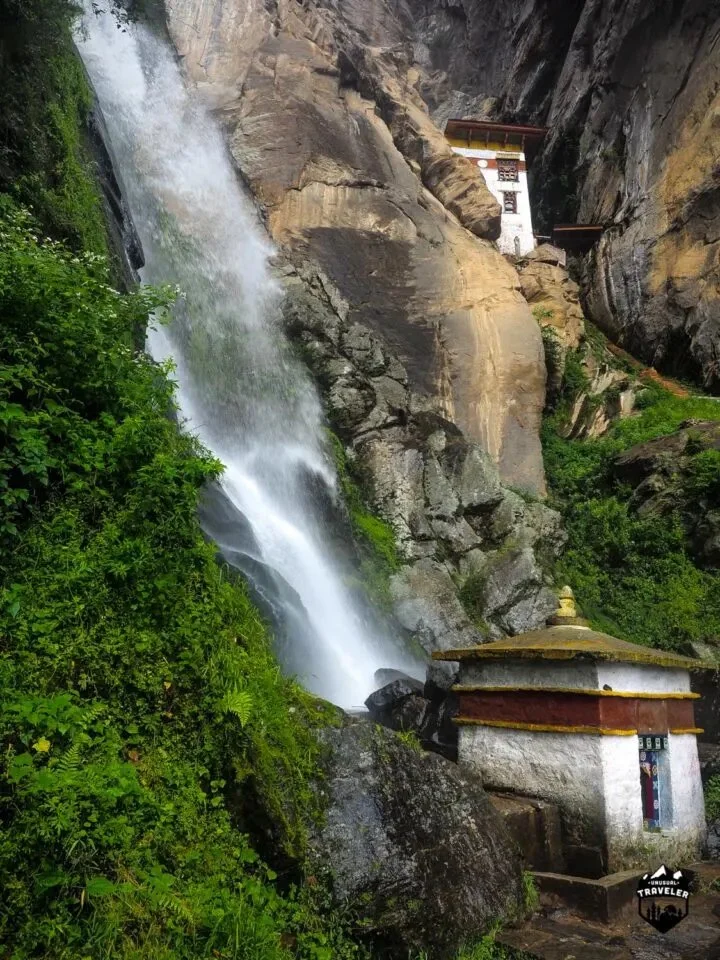
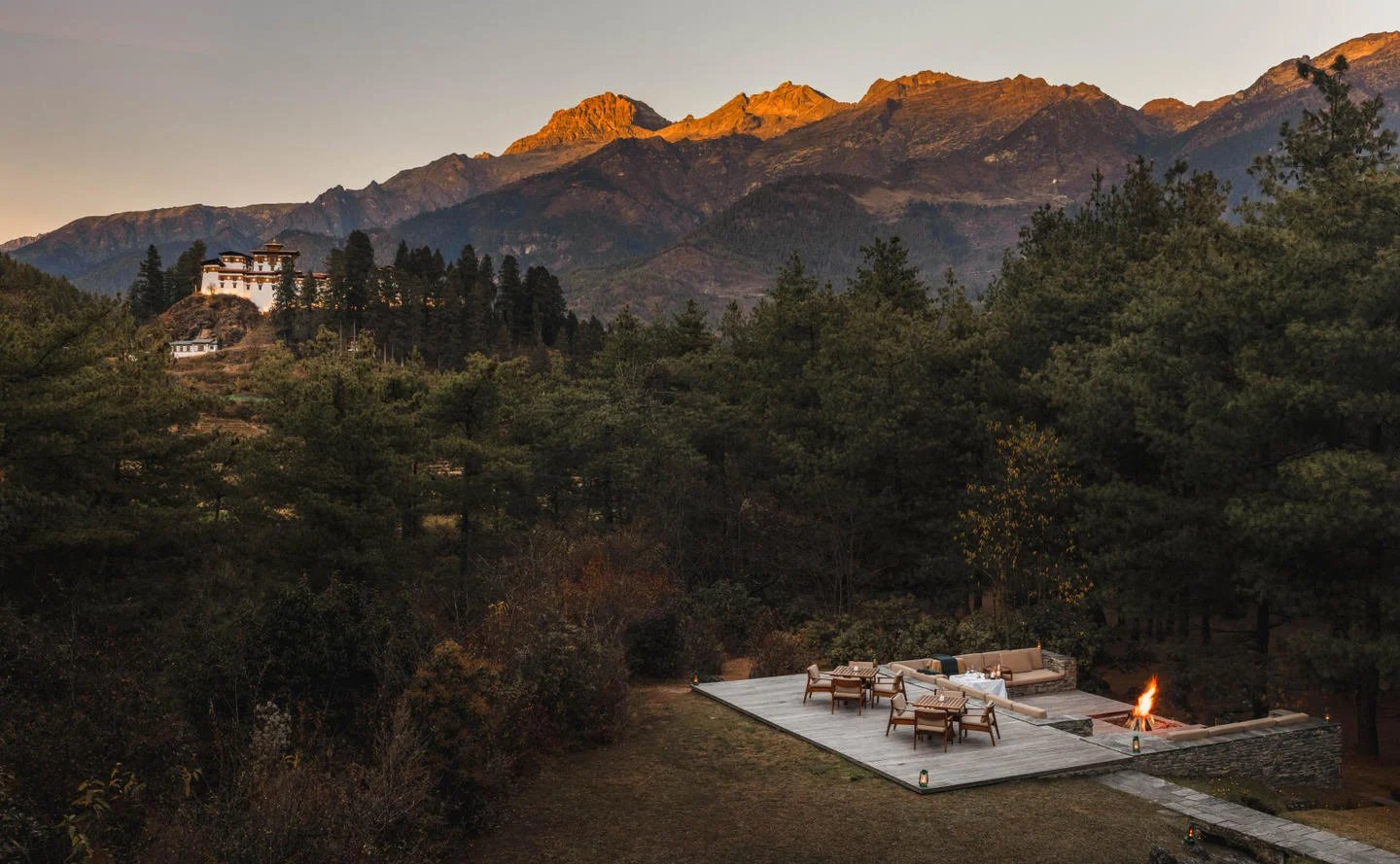
Where the sacred and
the sublime intertwine
Bhutan is more than a destination - it’s an invitation. An invitation to slow down, tune in, and move through the world with intention. It’s one of the last places on Earth where time isn’t measured in hurried footsteps or crowded itineraries, but in prayer flags dancing on the breeze, the rhythmic hum of monks in meditation, and the way golden light filters through the peaks at dawn.
This is a kingdom that exists on its own terms. Tucked between the Himalayas, Bhutan remains fiercely protective of its traditions, its landscapes, and its people - where luxury is defined not by excess, but by presence. Here, Gross National Happiness is more than an ideology; it’s embedded in the way communities live, in the care they extend to one another, in the deep reverence they hold for nature.
Bhutan’s history is woven with myths, monarchs, and mysticism; an unbroken thread of spirituality, resilience, and careful preservation. For centuries, this hidden Himalayan kingdom remained untouched by colonial rule, allowing its unique cultural identity to flourish uninterrupted. The land of the Thunder Dragon, or Druk Yul, has long been a sanctuary for Vajrayana Buddhism, a practice that shapes not just Bhutanese faith but daily life. Monasteries perch precariously on cliffs, ancient dzongs stand as both fortresses and spiritual hubs, and sacred texts dictate harmony between humans and nature.
Unlike much of the world, Bhutan has never chased modernisation at the expense of its heritage. Television only arrived in 1999, and even today, Bhutan moves on its own timeline, embracing progress selectively and on its own terms. Gross National Happiness (GNH) - a philosophy introduced by the fourth king - measures development not by GDP, but by well-being, sustainability, and cultural preservation. Tourism is regulated to maintain Bhutan’s ecological balance and spiritual sanctity, ensuring that those who visit are not just passing through, but contributing to its legacy.
To walk through Bhutan is to step through history. Where ancient trade routes once connected Tibet to the Indian subcontinent, where monks debated philosophy in fortress halls, and where time-honoured rituals still guide the ebb and flow of daily life. The kingdom stands as a reminder that the past need not be left behind, but can be woven seamlessly into the present - inviting travellers to not just witness history, but to feel its weight in every temple bell, every whispered prayer, and every mountain pass left undisturbed for centuries.
At SLOJOURN, we’ve curated Bhutan for those who seek depth over distance, meaning over movement. Our collection celebrates properties that honour Bhutanese craftsmanship, where stone, wood, and hand-painted murals pay homage to centuries-old techniques. Our recommended journeys lead you to sacred temples carved into cliff sides, hidden valleys where nomadic yak herders welcome you by the fire, and secluded wellness retreats where the air itself feels healing.
Bhutan isn’t a place to tick off a list, it’s a place that shifts something inside you. It’s in the moment you sip salted butter tea by a monastery window, watching mist roll over the dzongs and the slow treks through pine forests. It’s in the kindness of a local who presses a string of blessed beads into your palm as a quiet offering of protection.
This is travel at its most sacred, intentional, and transformative.
Welcome to Bhutan, as seen through the lens of SLOJOURN.
Where to Lay Your Head
Discover our curated portfolio of Bhutan stays.
Slow moves: navigating the journey
VISAS & ENTRY
𓇼 Bhutan follows a strict high-value, low-impact tourism model, meaning all visitors must travel on a pre-arranged visa through the Department of Tourism. Independent travel isn’t permitted - your journey must be booked through an authorised tour operator (we got you).
SDF - SUSTAINABLE DEVELOPMENT FEE
This kingdom is steeped in history, with a gaze fixed on the future. The future requires Bhutan to protect and preserve their heritage but also to forge new pathways leading forthcoming generations to fresh possibilities. A Mandatory SDF of USD100 per Adult per Night + USD50 per Child per night, will apply for the entirety of your time in Bhutan.
We encourage you to discover how it will expertly be utilised by the destination here.
GETTING AROUND
𓇼 The Seamless Way - Travel in Bhutan is always private and pre-organised. A dedicated driver and guide ensure smooth movement through its valleys and mountain passes, allowing you to focus entirely on the experience.
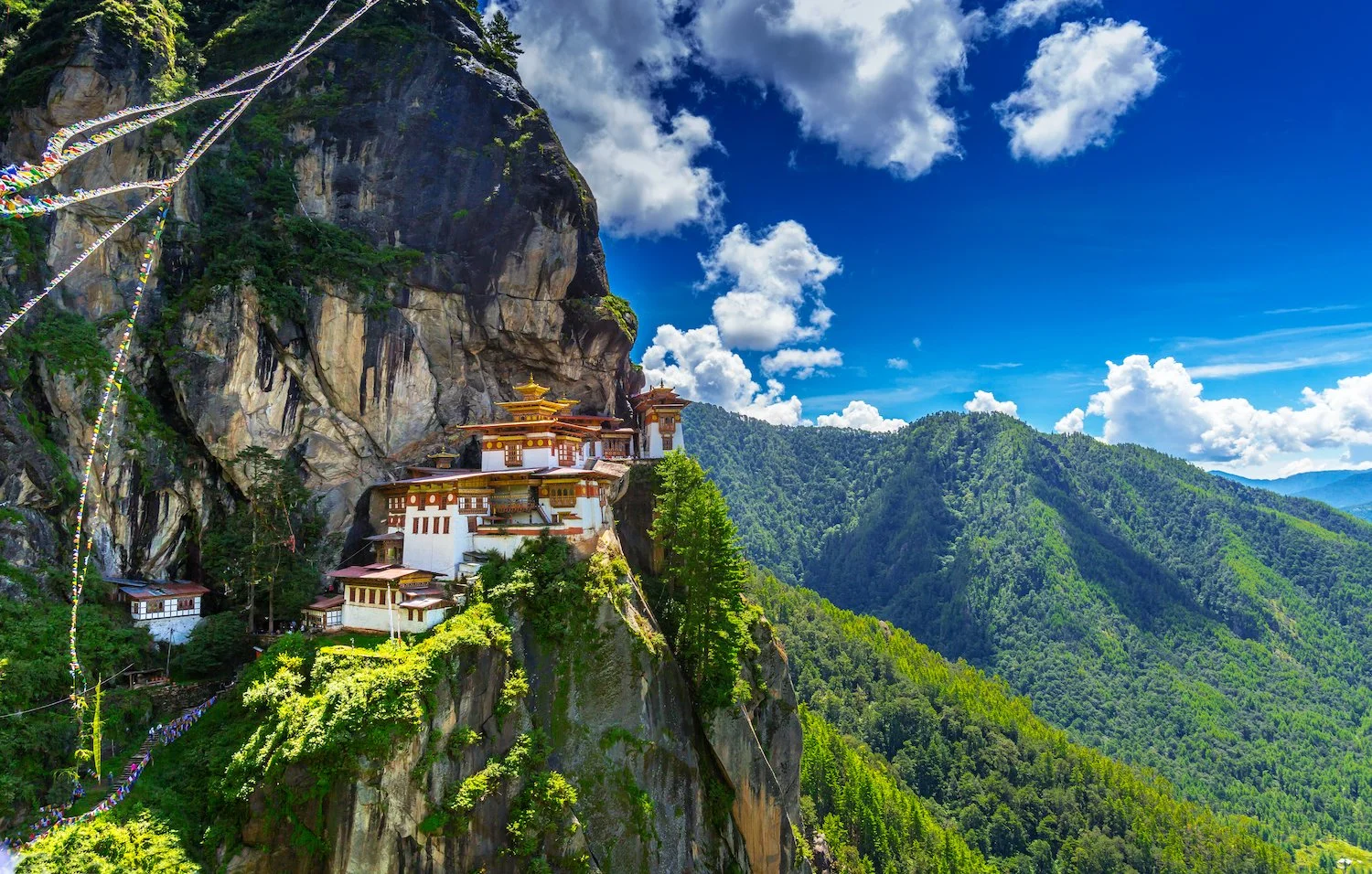
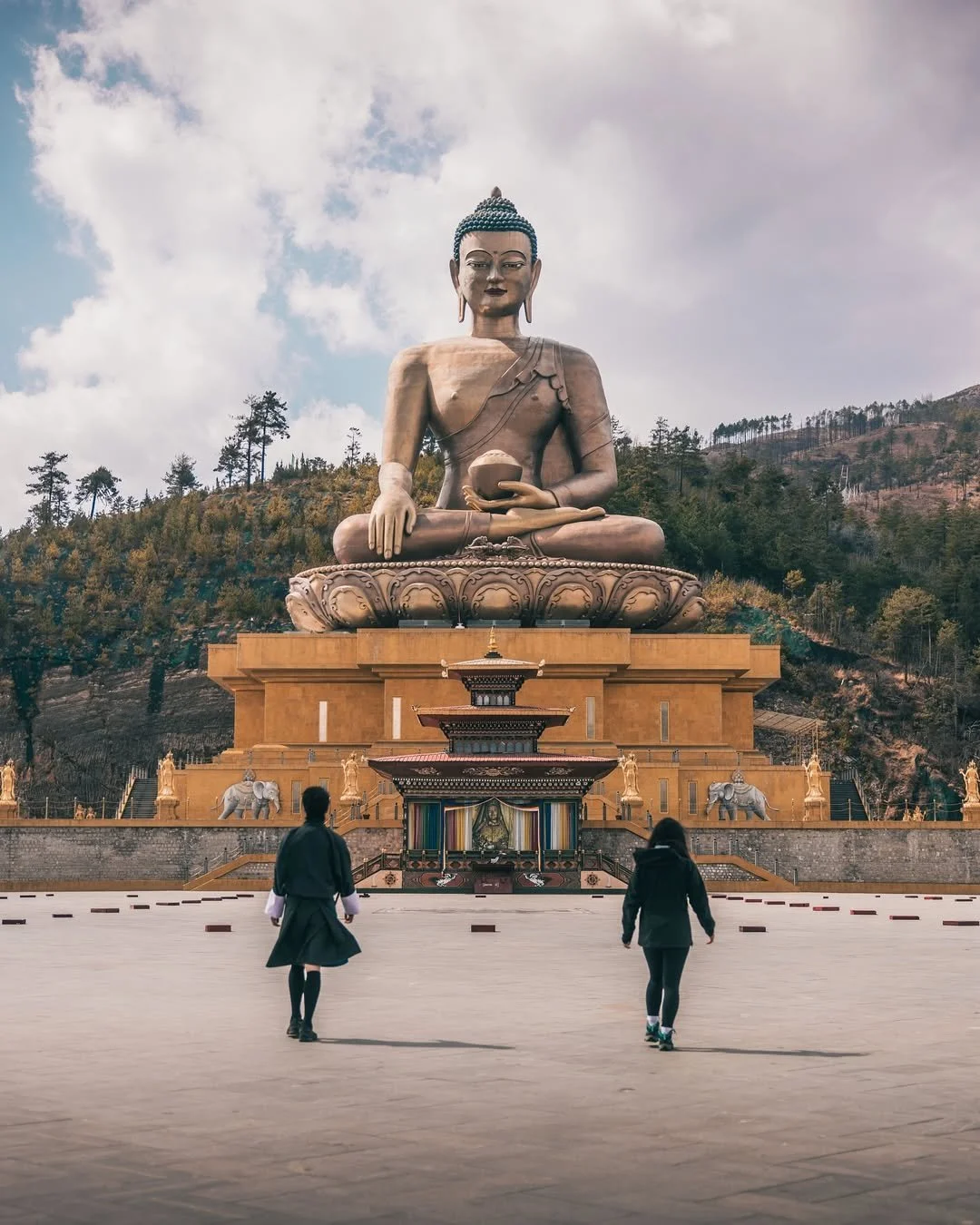
𓇼 The Pilgrim’s Path – Bhutan is a land best explored on foot or by bike! From the legendary hike to Tiger’s Nest Monastery to remote treks that lead to sacred lakes, the most profound encounters come when you move at nature’s pace. You will still need a guide for this journey.
No traffic lights. No rush. No digital overwhelm. Just the road, the mountains, and the kind of silence that resets something inside you. In short, you cannot navigate Bhutan alone, you need to be accompanied by a registered guide which we can assist with.
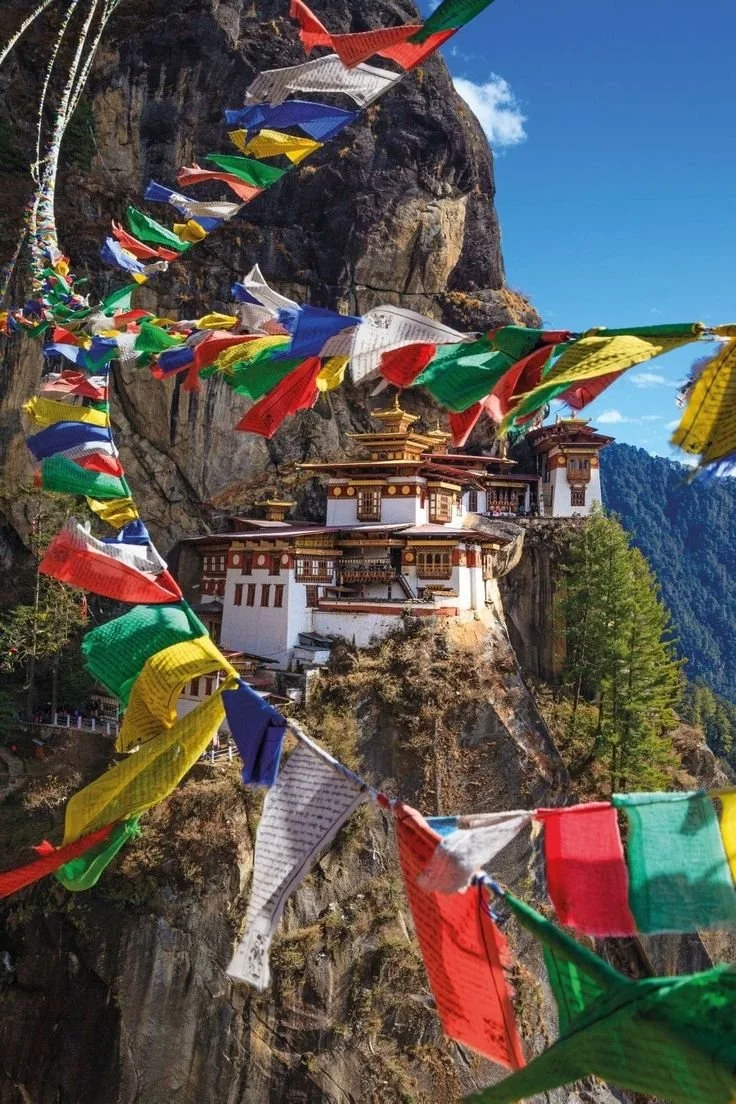
Bhutan spirit & story
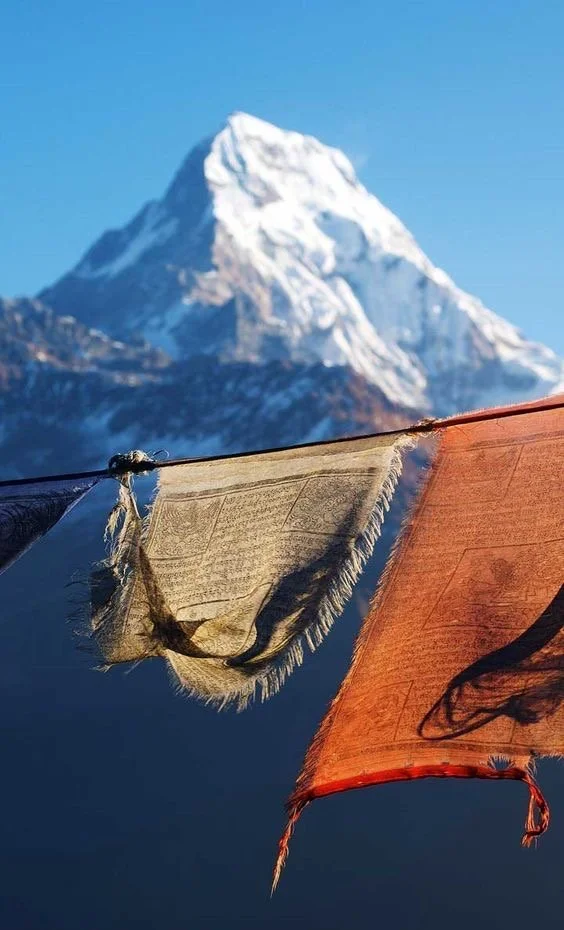
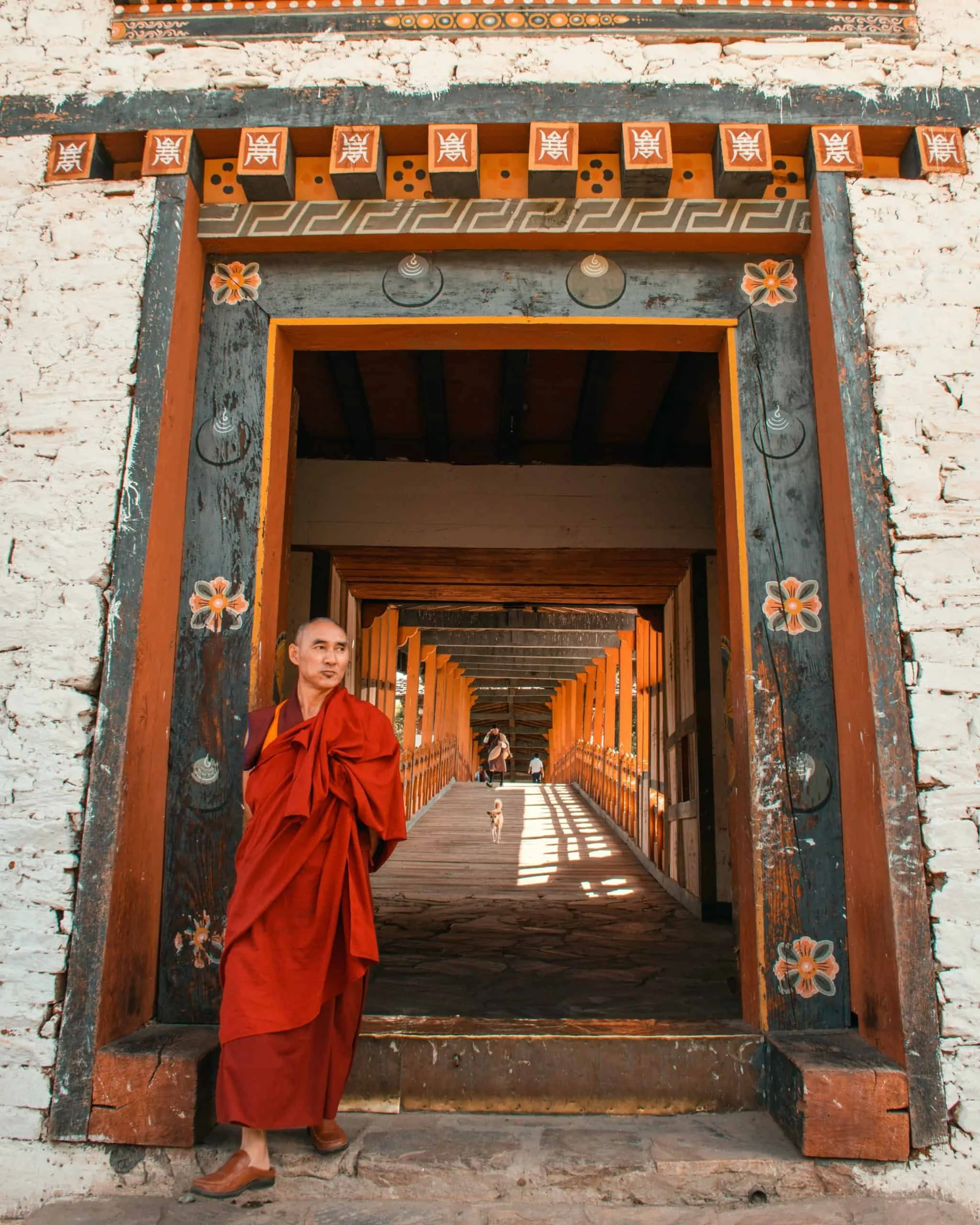
Here, prayer flags aren’t decoration - they’re declarations. Bhutan’s story is etched in wind and wood: in the clang of temple bells, the hush of pine forests, and the timeless echo of monks in saffron robes.
This is a country that measures its wealth in happiness and its legacy in balance. It is a kingdom where dragons guard wisdom, where mountain passes are gateways to inner clarity, and where the sacred isn’t hidden - it’s simply part of the landscape. In Bhutan, you don’t just observe ritual, you enter it.
Let the cliffs of Paro whisper their lessons. Let the hush inside Punakha Dzong still your spirit. Let the stories of this place move through you like mountain mist - quiet, ancient, and holy.
Local voices
Language, lore, and a reverence for rhythm define Bhutan’s cultural cadence.
𓇼 “Kuzu zangpo la” – A graceful greeting meaning “hello” or “good day.” Said with hands clasped and eyes soft, it’s a blessing, not just a word.
𓇼 Kadrinchey (ka-drin-chey) – Thank you.
𓇼 Log jaygay (log jay-gay) – Goodbye / See you again.
𓇼 “Druk Yul” – The Land of the Thunder Dragon. Bhutan’s traditional name, evoking myth, might, and mist-shrouded sovereignty.
𓇼 Tashi delek (ta-shee de-lek) – A common greeting/blessing, meaning "good luck" or "may prosperity be with you".
𓇼 “Chö” – Dharma. The path, the teachings. It shapes not only religion, but daily life.
𓇼 “Lha gyal lo!” – A joyful exclamation meaning “May the gods prevail!” Often used in celebration or at the end of a successful festival dance.
Pair this with a sacred Bhutanese melody, like the Zhundra folk songs sung during Tsechus (religious festivals), and you’ll begin to understand that in Bhutan, every word carries the weight of centuries, and every sound is an offering.
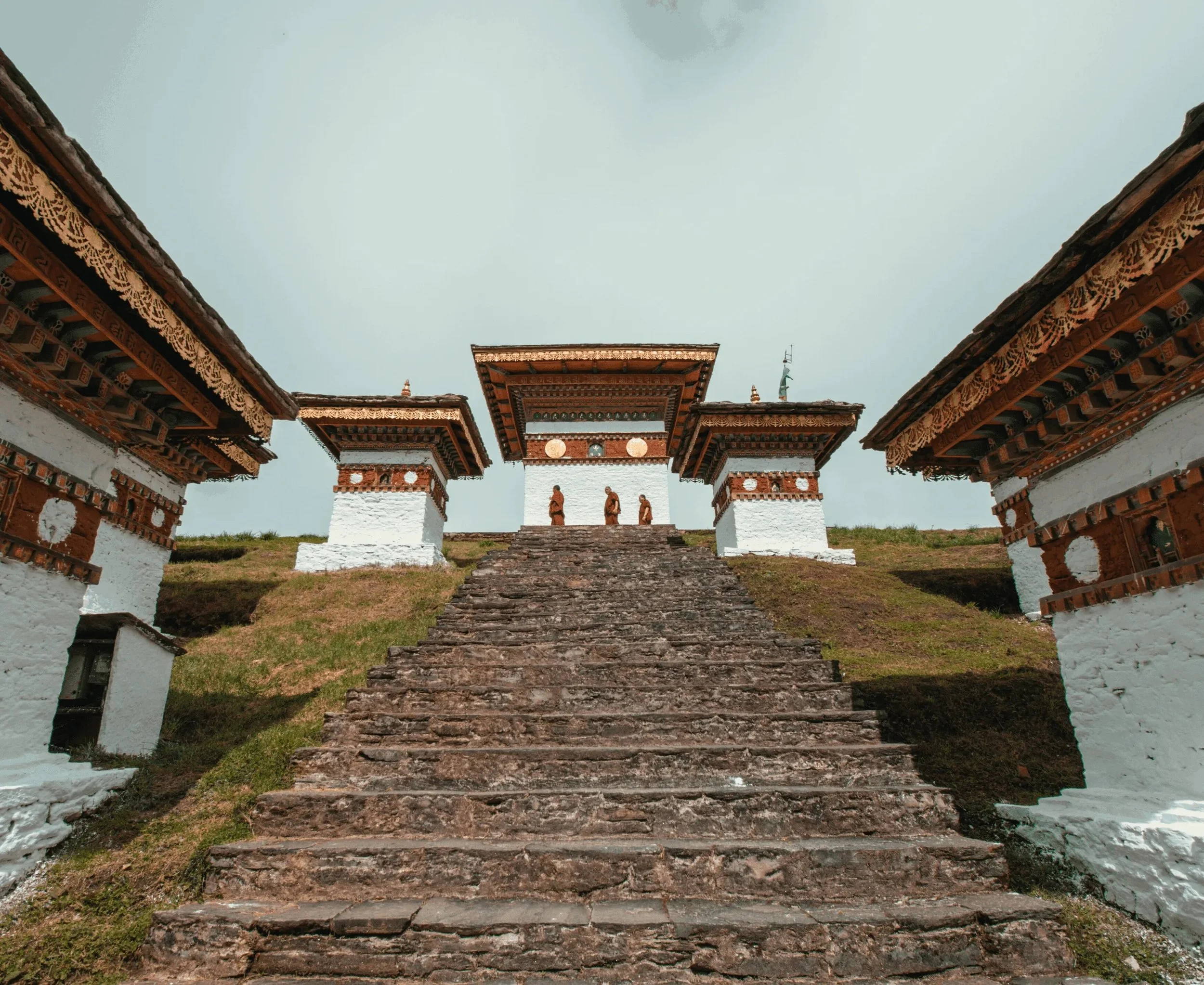
Beauty without blinders
THE ETHICS OF TRAVELLING HERE
Travel with tact, tenderness, and deep responsibility.
Bhutan is often romanticised as a mythical Shangri-La - but even magic has layers. Yes, it’s a carbon-negative kingdom guided by Gross National Happiness, but it’s also a real place with complexities, contradictions, and communities navigating change. To walk these valleys as a guest is a privilege, one that demands intention.
-
Modernisation is slow, by design. Bhutan only opened to tourism in 1974 and restricts visitor numbers through a high-value, low-impact model. Respect the pace. Expect limited Wi-Fi. That’s the point.
Sustainability is law, not trend. Forest cover is constitutionally protected, and plastic use is strictly regulated. Bhutan walks its talk. You should too.
Spirituality isn’t a performance. Monasteries are active spaces of devotion. Rituals are not for entertainment. Bow softly. Dress mindfully. Listen more than you speak.
Cultural preservation is an everyday act. From national dress codes to Dzong architecture, Bhutanese identity is sacred. Avoid parody. Celebrate without co-opting.
-
Choose depth over checklist. Five Dzongs in one day? Or tea with a monk at one? Take the slow path.
Dress with respect. Cover shoulders and legs at temples. Carry a scarf. Layer with intention - and grace.
Pay the Sustainable Development Fee (SDF) without complaint. It funds healthcare, conservation, and education. Think of it as a built-in donation to the Bhutan you came to witness.
Stay curious but culturally aware. Ask questions. Avoid assumptions. Let your guides (and the land) lead the story.
Support local. Buy textiles directly from artisans. Visit family-run lodges. Say yes to that extra round of butter tea.
-
Because Bhutan teaches us how to be better guests - of landscapes, of cultures, of each other. It reminds us that true wealth isn’t what you accumulate, but what you protect. And that the quietest countries often have the loudest lessons.
To travel here is to re-learn how to tread lightly, listen deeply, and live with intention.
Yes future
Bhutan is not just a nation - it’s a philosophy in action. With sustainability enshrined in its constitution and a deep cultural respect for nature, every visit here is an opportunity to support a country pioneering regenerative travel.
-
Bhutan remains the only carbon-negative country in the world. Every visitor contributes to conservation efforts that keep its forests thriving and its rivers pristine.
-
Many luxury lodges partner with local monasteries, offering guests the chance to support young monks' education and heritage preservation through ethical donations and immersive learning experiences.
-
Handwoven textiles, intricate thangkas, and artisanal crafts are integral to Bhutanese identity. Look beyond the souvenir stalls, visit weaving collectives and handicraft schools where your purchase directly sustains centuries-old craftsmanship.
-
Bhutan aims to be the world's first fully organic nation. Many hotels source from local farmers using regenerative methods, ensuring every meal served is a story of the land.
Soundscapes
The art of slow travel begins with setting the mood. Press play on our destination-inspired playlists and let your mind wander to far-off shores.
Styled by SLO
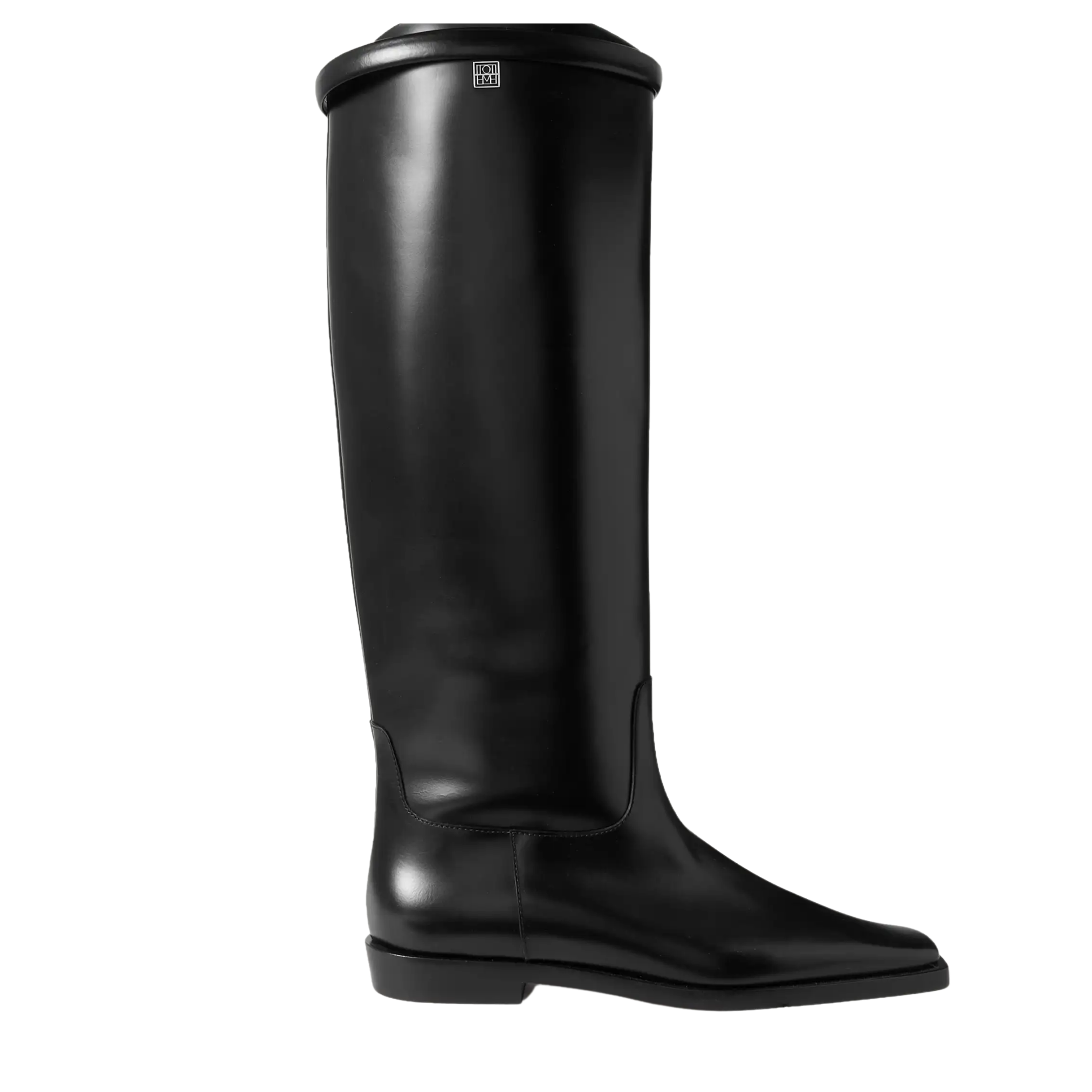
A destination as wild and wondrous as Bhutan demands a wardrobe that moves with the landscape. With its dramatic seasonal shifts, layering is an art form - practical, but never without style.
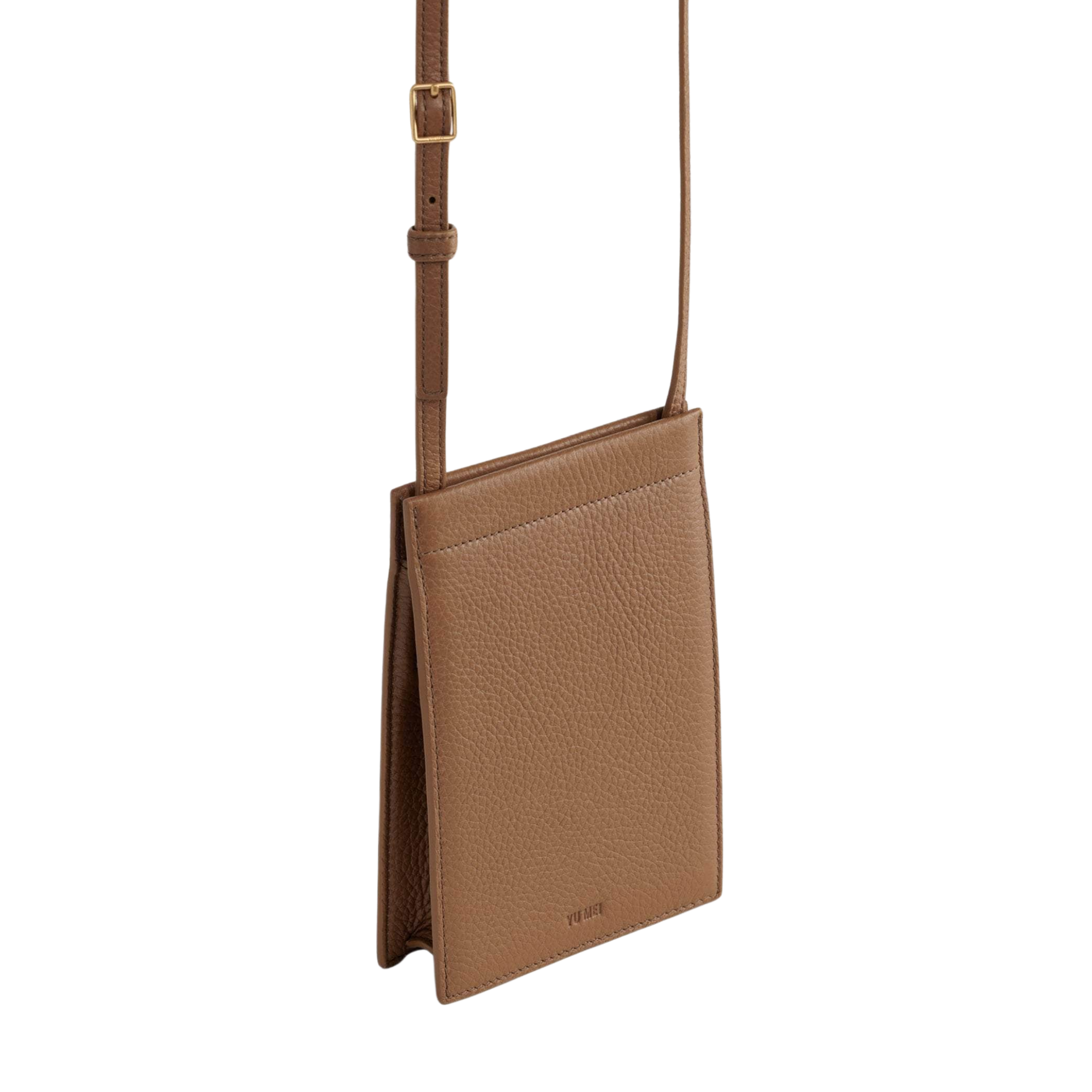
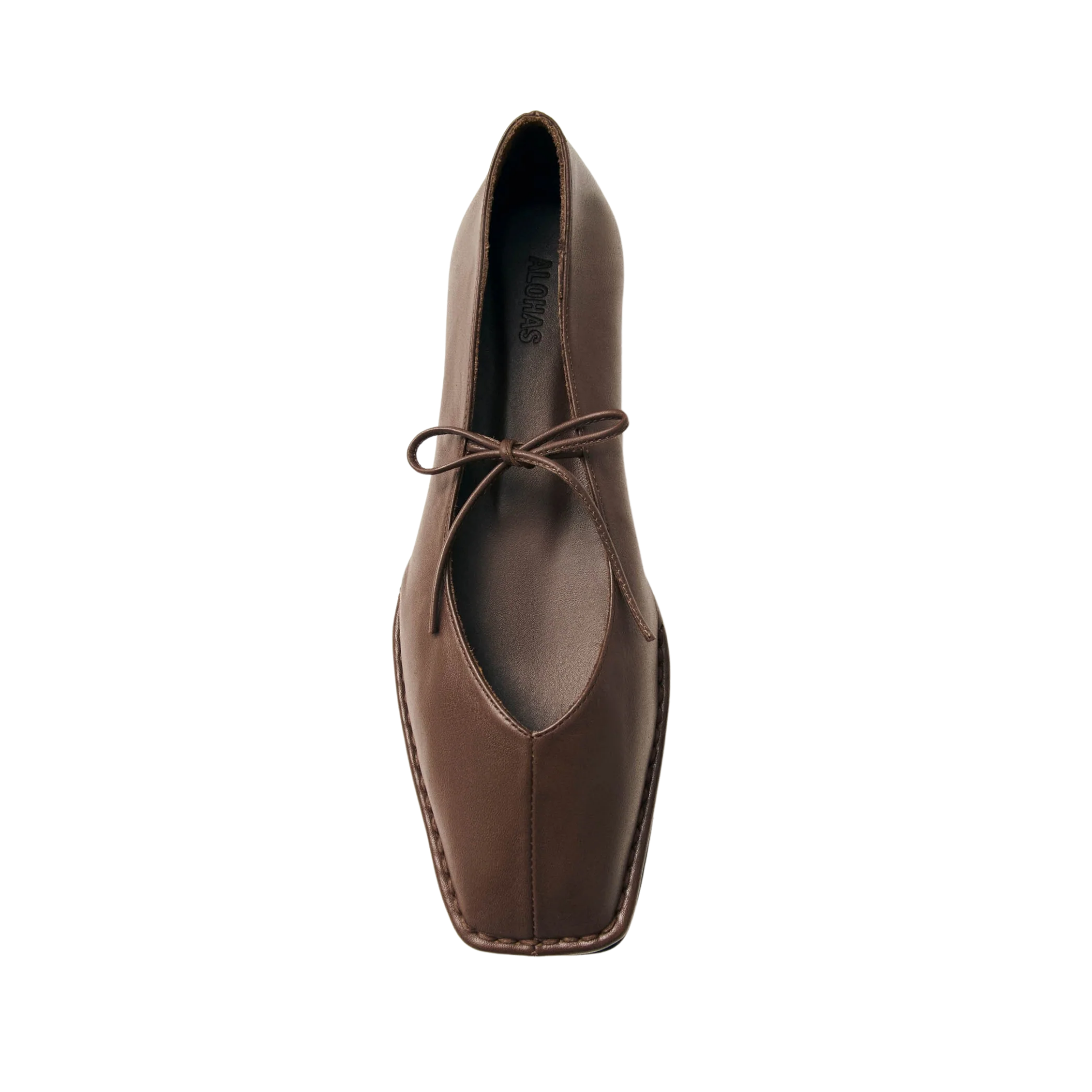
We’ve curated two shoppable essential edits, winter & summer, to ensure you arrive effortlessly prepared, with a few transitional staples sprinkled in. Whether you’re trekking through misty pine forests, sipping butter tea in a monastery, or settling into a fireside dinner at a high-altitude lodge, your wardrobe should feel as considered as your journey.
Because here, travel isn’t just about where you go - it’s about how you move through it.
Edits for hot








Edits for cool
SLOJOURN secrets
-
Step beyond the usual visitor route and arrange a private blessing with the monks at Bhutan’s most majestic dzong. Whether for safe travels, love, or luck, this ancient ritual lingers long after you leave.
-
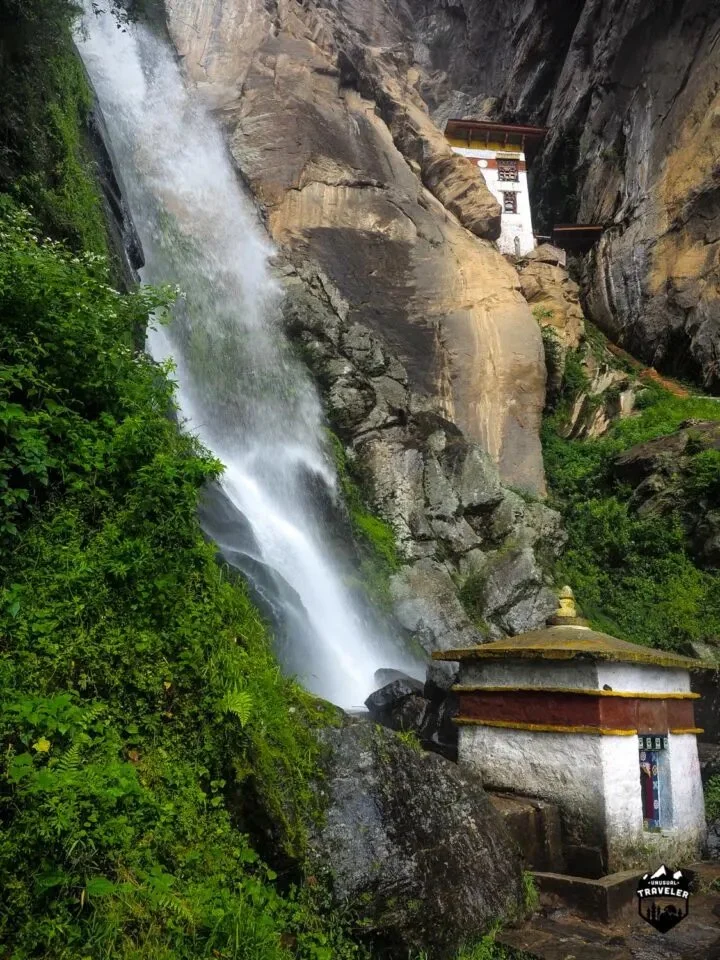
Skip the midday crowds and begin your Pilgrimage to Paro Taktsang (Tiger’s Nest Monastery) before dawn. Arrive as the first rays of light hit the cliffs, illuminating the golden rooftops in an ethereal glow. Bonus? You’ll have the monastery’s serene halls almost to yourself.
-
A lesser-known escape for those who want Bhutan, uninterrupted. Hike through rhododendron forests and undulating pastures to find local villages untouched by time. Homestays here offer an intimate look at traditional Bhutanese hospitality.
-
Monks don’t just meditate; they host. Arrange a quiet tea ceremony within the walls of a working monastery, where the act of sharing salted butter tea becomes a spiritual exchange rather than just a drink.
-
Bhutanese astrology dictates everything from marriage dates to major life decisions. Visit an expert astrologer at a temple, where ancient texts and celestial calculations reveal what’s written in the stars for you.
Local Lowdown
-
Bhutanese national dress, the gho for men and kira for women, is still widely worn, especially at temples and dzongs. If you’re attending a festival, you can rent one and blend right in.
-
Bhutan runs on mountain time. Meals, drives, and experiences unfold unhurriedly. It’s part of the magic, let it recalibrate your rhythm.
-
Even though English will get you by, showing an effort to speak a few words of Dzongkha is a sign of respect and often met with warm smiles. Most Bhutanese will speak exceptional English in the main areas (because English is now their primary language of education).
-
Never point at religious objects with your finger, never step over prayer flags, and always walk clockwise around sacred sites. You will find the Bhutanese people elegantly gesturing instead of pointing, and PLEASE do not miss the world’s best Traffic Controller located at the main roundabout in Thimphu, whose gestures are unmatched.
-
These traditional baths, heated by river stones infused with medicinal herbs, are deeply rejuvenating and best experienced in the countryside under the stars.
*BONUS POINTS if you head straight to the local Hot Stone Baths post Tiger’s Nest hike.
Your curated SLOJOURN check-list for Bhutan
-
𓇼 Let Bhutan set the pace. No rushing, no urgency, just the rhythm of monastery bells and the wind weaving through the valleys.
𓇼 Honour the unseen. Spirituality is woven into Bhutanese life. You’ll feel it in the mountains, the monasteries, even in the way people move. Respect it.
𓇼 Embrace the unexpected. Some of the best moments here aren’t on the itinerary. Let detours and quiet encounters shape your journey.
𓇼 Disconnect to reconnect. Wi-Fi is readily available and most people get local sims on arrival. BUT we’re here to tell you, Bhutan is best experienced offline. -
𓇼 Layers, always. Bhutan shifts between sun-soaked valleys and frost-kissed mountain passes in a single day. Think thermal base layers, cashmere, and lightweight outerwear.
𓇼 A shawl or scarf. For temples, chilly mornings, and a chic extra layer when the mountain air bites.
𓇼 Good walking boots. Bhutan is a land of staircases, sacred hikes, and dirt paths that lead to magic. A stylish sneaker won’t cut it here.
𓇼 A travel journal. Bhutan’s philosophy of happiness, mindfulness, and balance will leave an imprint, write it down.
𓇼 A reusable water bottle. Bhutan is carbon-negative; keep it that way.
𓇼 Travel Motion Sickness Meds - trust us. The twists and turns of a Bhutanese journey had us buckled over in the altitude.
𓇼 A silk eye mask. Himalayan sunrises come early. Be prepared. -
𓇼 Start the day with silence. Bhutanese mornings are slow and sacred - follow suit.
𓇼 Take the long way up. The trek to Tiger’s Nest Monastery is a spiritual rite of passage, not a race. Pause. Breathe. Let the moment sink in.
𓇼 Soak in a traditional hot stone bath. River-heated stones, medicinal herbs, and the kind of deep relaxation you’ll wish you could bottle.
𓇼 Meditate at dawn. Whether at a monastery or overlooking a mist-draped valley, Bhutan is built for stillness.
𓇼 Skip the gym. Your workout is built into the land- monastery staircases, high-altitude hikes, and long walks through ancient valleys. -
𓇼 Embrace the spice. Bhutanese Ezay (chili paste) will ignite your tastebuds- we’re still dreaming of this.
𓇼 Ema Datshi (chili cheese stew) is a must. It’s fiery, indulgent, and found everywhere from monasteries to luxury lodges.
𓇼 Yak butter tea- try it at least once. Rich, salty, and surprisingly comforting on a crisp mountain morning.
𓇼 Go for buckwheat pancakes & red rice. Staples of the Bhutanese diet, locally grown and wildly delicious.
𓇼 Sip on Ara. Bhutan’s local moonshine, often homemade, best enjoyed under the stars. -
𓇼 Support local artisans. Bhutan’s weaving culture is centuries-old, and every piece tells a story. Invest in handmade textiles directly from the artisans who create them.
𓇼 Stay conscious of sacred spaces. Always walk clockwise around temples and stupas, never point your feet at altars, and let photography take a backseat to presence.
𓇼 Leave no trace. Bhutan’s forests and monasteries have remained pristine for a reason - help keep it that way.
𓇼 Travel with gratitude. Bhutan’s people open their world to you. Acknowledge it, respect it, and carry its lessons forward.
Bhutan, you slow us down with grace
In your forests, silence is sacred. In your temples, joy hums without performance. You teach us that happiness lives not in things, but in balance.
Here, stillness is resistance. Ritual is rhythm. Reverence is a way of life.
We’ll carry your wisdom like prayer flags on the wind: quiet, grounded, and deeply moved.
With awe and eternal softness,
Love always -
The SLOJOURN team.
Kindred places: we’re obsessed…